
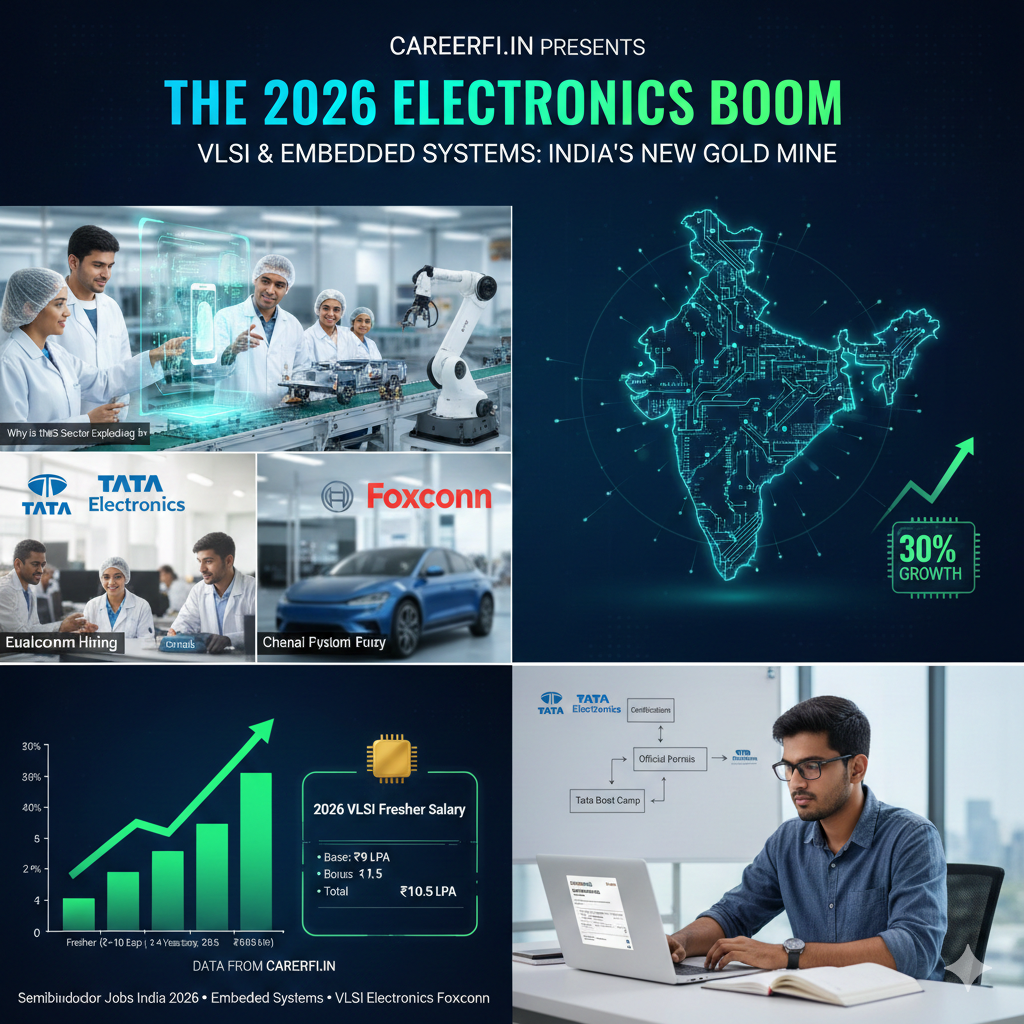
The 2026 Electronics Boom: Why VLSI & Embedded Systems Are India’s New Gold Mine
India stands at the threshold of a historic transformation. As we enter 2026, the nation has decisively shifted from being a global electronics consumer to a world-class electronics manufacturing and innovation hub. The Electronics Manufacturing Services (EMS) sector, projected to grow at over 30%, is no longer driven by speculation—it is powered by policy, geopolitics, technology, and talent.
For students and professionals in Electronics, Electrical, and allied engineering disciplines, this phase represents a once-in-a-generation opportunity. The convergence of semiconductor manufacturing, embedded intelligence, EV adoption, 5G expansion, and AI-driven hardware has made VLSI and Embedded Systems the most valuable technical skills in India’s engineering ecosystem.
We present a comprehensive, forward-looking guide that explains where the growth is coming from, which companies are hiring aggressively, what salaries look like in 2026, and how engineers can position themselves for high-impact roles.
Why India’s EMS Sector Is Exploding in 2026
The unprecedented growth of India’s EMS sector is not cyclical—it is structural and irreversible. Several global and domestic forces are working in alignment.
The Semiconductor Mission in Full Execution Mode
India’s Semiconductor Mission has moved beyond announcements into active, high-capacity operations. Multiple ATMP (Assembly, Testing, Marking, and Packaging) plants have reached peak utilization in 2026. Facilities such as Micron Technology’s Sanand plant and Tata Electronics’ Jagiroad unit are anchoring India’s presence in the global semiconductor supply chain.
These facilities demand a continuous pipeline of VLSI design engineers, process engineers, yield engineers, validation experts, and embedded firmware specialists, creating thousands of high-value jobs annually.
China Plus One Has Become China Plus India
Global electronics majors are no longer diversifying “optionally.” The China Plus One strategy has matured into China Plus India. With robust infrastructure, skilled manpower, and strong policy support, India has emerged as the most reliable alternative manufacturing base.
The impact is visible in the rapid expansion of component manufacturing, PCB design, chip testing, RF modules, and system-level integration, all of which depend heavily on embedded and VLSI talent.
The Apple–Foxconn Manufacturing Flywheel
India is now the world’s second-largest mobile phone manufacturer. Foxconn’s Indian arm, Yuzhan Technology, has received multiple approvals to manufacture high-value electronic components locally. This has pushed the ecosystem beyond assembly into core electronics design, testing, and validation, accelerating demand for skilled engineers.
EVs, 5G, and AI Hardware Driving Perpetual Demand
Every Electric Vehicle, 5G base station, IoT device, and AI accelerator integrates thousands of chips. This has created a perpetual demand cycle for embedded systems developers, RTL designers, and verification engineers. Unlike software cycles, hardware demand remains resilient and long-term.
Why VLSI and Embedded Systems Are the Most Valuable Skills in 2026
In 2026, not all engineering skills are valued equally. Hardware-centric expertise has moved to the top of the compensation and demand ladder.
-
VLSI engineers design, verify, and optimize the chips that power modern electronics.
-
Embedded systems engineers bridge hardware and software, enabling intelligence in machines.
-
Design-for-Testability (DFT) and Physical Design specialists are in acute shortage, making them premium hires.
The global shortage of semiconductor talent has pushed companies to invest aggressively in India, where the skill density is high and the learning curve is fast.
Top Companies Hiring VLSI & Embedded Engineers in India (2026)
The hiring landscape has shifted decisively from traditional IT services to hardware-first organizations.
Tata Electronics
Tata Electronics leads India’s semiconductor push with massive facilities in Dholera (Gujarat) and Jagiroad (Assam). The company is hiring across:
-
VLSI Design & Verification
-
Process Engineering
-
Yield Enhancement
-
Embedded Systems & Automation
Foxconn (Hon Hai Precision Industry)
Foxconn continues rapid expansion in Tamil Nadu and Karnataka, recruiting for:
-
RF Hardware Engineering
-
System Validation
-
Manufacturing Quality & Reliability
-
Embedded Firmware Development
Micron Technology
Micron’s Gujarat facility has become a magnet for semiconductor professionals, with roles in:
-
Testing & Packaging
-
Product Engineering
-
Failure Analysis
-
Automation & Embedded Control Systems
Global Semiconductor Giants
Companies such as Qualcomm, Intel, Samsung, and AMD are scaling their Indian R&D centers to work on 5nm and 3nm chip technologies, hiring engineers skilled in advanced nodes and complex verification methodologies.
Dixon Technologies
India’s leading EMS player is expanding aggressively into laptops, tablets, and consumer electronics, creating sustained demand for embedded hardware engineers and manufacturing technologists.
VLSI Fresher Salary in India 2026: A Realistic Outlook
The talent shortage has significantly altered compensation benchmarks. In 2026, VLSI and Embedded roles consistently outperform entry-level IT roles.
| Experience Level | Role | Annual Salary Range (2026) |
|---|---|---|
| Fresher (General) | Graduate Engineer Trainee (GET) | ₹6 LPA – ₹10 LPA |
| Fresher (Tier 1 / IIT) | Design / Verification Engineer | ₹12 LPA – ₹18 LPA |
| 2–4 Years | Physical Design / RTL Engineer | ₹15 LPA – ₹28 LPA |
| 5+ Years | Staff Engineer / Chip Architect | ₹35 LPA – ₹70 LPA+ |
Strategic Insight: Engineers specializing in Physical Design, DFT, or Advanced Verification (UVM) command 20–30% higher starting packages due to limited talent availability.
How to Secure Roles at Tata Electronics, Foxconn, and Global Chip Firms
Competition is intense, but structured preparation delivers results. In 2026, companies prioritize demonstrated capability over academic pedigree alone.
Industry-Relevant Certifications
Certifications in Verilog, SystemVerilog, UVM, Embedded C, RTOS, and SoC Architecture significantly improve shortlist rates. Hands-on labs and project-based learning carry the most weight.
Direct Hiring Channels Matter
Core electronics roles are rarely posted on generic job portals. We recommend tracking:
-
Official Tata Electronics Careers pages
-
Company LinkedIn announcements
-
University and regional recruitment drives
Boot Camps and Technical Assessments
Organizations such as Tata Electronics conduct multi-day technical boot camps to evaluate problem-solving ability, design thinking, and practical knowledge. Preparation must focus on real-world application, not rote learning.
Regional Hiring Hotspots
High-volume recruitment continues in:
-
Assam (Jagiroad)
-
Gujarat (Sanand, Dholera)
-
Tamil Nadu (Hosur, Chennai belt)
-
Karnataka (Bengaluru R&D hubs)
The Long-Term Career Advantage of Hardware Expertise
Unlike volatile software roles, hardware engineering careers mature over decades. Engineers progress from execution to architecture, leadership, and innovation roles. The learning curve is steep, but the rewards are durable—both financially and professionally.
India’s emergence as a global electronics laboratory ensures sustained relevance for VLSI and embedded professionals well beyond 2030.
Final Perspective: India’s Silicon Moment Is Now
The facts are unmistakable. 2026 marks India’s definitive arrival in global electronics manufacturing and design. Engineers who invest early in VLSI and Embedded Systems are positioning themselves at the epicenter of this transformation.
We believe the opportunity window is open now—but it will not remain underutilized for long. Skill depth, hands-on experience, and strategic preparation will define who benefits most from this electronics boom.