
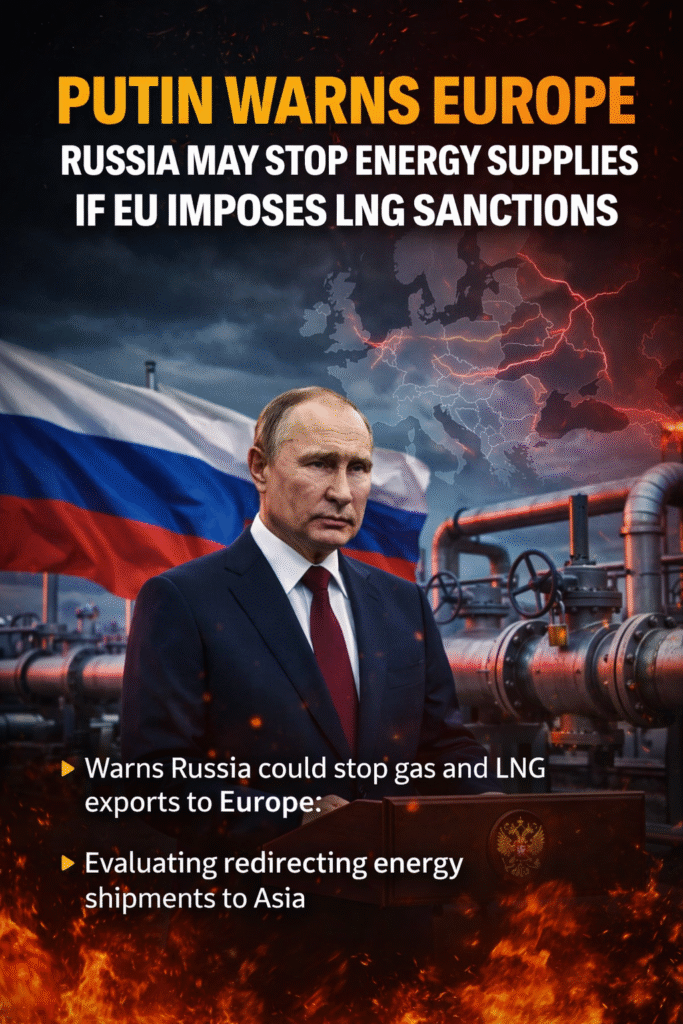
Putin Warns Europe: Russia May Stop Energy Supplies if EU Imposes New LNG Sanctions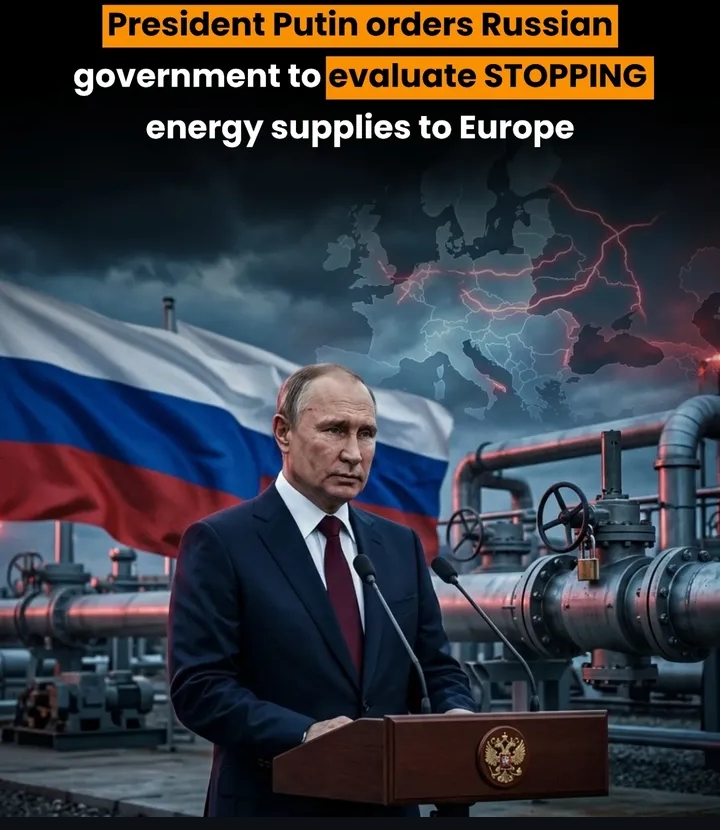
Russian President Vladimir Putin has warned that Russia may consider
stopping energy supplies to Europe if the European Union proceeds with
additional restrictions on Russian liquefied natural gas (LNG) and gas exports.
The statement signals growing tensions between Russia and the EU as both sides
continue to clash over energy policies and geopolitical conflicts.
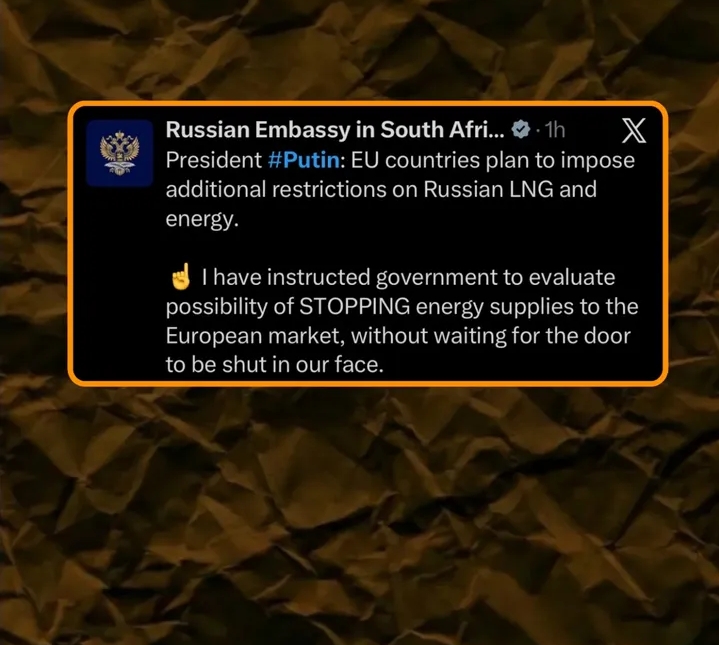
According to official statements, Putin has instructed the Russian government to
evaluate the possibility of halting energy exports to European markets. The move
would represent a major shift in global energy trade and could significantly
impact energy prices and supply chains across Europe.
Putin Orders Government to Evaluate Energy Supply Suspension
President Putin stated that Russia should not wait until European sanctions
severely damage its energy trade. Instead, he directed the government to examine
proactive strategies that could protect Russia’s economic and energy interests.
One of the key options being considered is the potential suspension of energy
supplies to Europe if the EU moves forward with additional sanctions targeting
Russian LNG and gas exports. Putin emphasized that Russia must evaluate
alternative strategies rather than waiting for restrictions that could harm
its export revenues.
EU Considering New Restrictions on Russian LNG
The European Union has been actively working to reduce its dependence on Russian
energy since the beginning of the Russia-Ukraine conflict. European leaders have
discussed implementing further restrictions on Russian LNG imports as part of a
broader sanctions package aimed at limiting Moscow’s energy revenues.
Over the past few years, Europe has attempted to diversify its energy sources by:
- Increasing LNG imports from countries such as the United States and Qatar
- Expanding renewable energy projects
- Strengthening energy partnerships with alternative suppliers
- Improving gas storage and supply security across the region
Despite these efforts, Russian energy resources still play a role in Europe’s
energy mix, particularly through LNG shipments and pipeline gas supplies.
Russia May Redirect Energy Exports to Asia
 œ
œ
If Europe tightens sanctions further, Russia may redirect its energy exports to
alternative markets. Asian economies are expected to play a key role in this
strategy as energy demand in the region continues to grow rapidly.
Countries that could become larger buyers of Russian energy include:
- China
- India
- Other Southeast Asian economies
Energy analysts suggest that redirecting exports toward Asia could accelerate a
major transformation in global energy trade patterns. Russia has already begun
expanding energy partnerships in Asia to reduce its reliance on European markets.
Potential Impact on Global Energy Markets
Any decision by Russia to halt energy supplies to Europe could have serious
implications for global energy markets. Europe has experienced significant energy
price volatility in recent years, particularly during periods of reduced gas
supply.
Possible consequences of such a move include:
- Higher natural gas prices across European markets
- Increased competition for LNG shipments worldwide
- Greater reliance on renewable and alternative energy sources
- Shifts in geopolitical alliances related to energy trade
Experts warn that a complete shutdown of Russian energy supplies to Europe could
trigger another energy crisis similar to the one experienced during previous
periods of supply disruption.
Europe’s Efforts to Reduce Energy Dependence
European governments have accelerated long-term plans to reduce dependence on
Russian energy resources. Investments in renewable energy technologies, LNG
import terminals, and new pipeline agreements are part of Europe’s broader
energy security strategy.
However, analysts note that fully replacing Russian energy imports remains a
complex challenge that may take several years to achieve.
Energy as a Geopolitical Tool
The latest developments highlight how energy resources continue to play a
significant role in global geopolitics. Energy exports are not only economic
assets but also strategic tools that countries may use in international
negotiations and conflicts.
As tensions between Russia and the European Union persist, the future of energy
trade between the two regions remains uncertain. The coming months will likely
determine whether diplomatic negotiations ease tensions or whether the dispute
leads to further disruptions in global energy supply.
Conclusion
President Vladimir Putin’s warning about potentially stopping energy supplies
to Europe underscores the growing energy standoff between Russia and the
European Union. If new sanctions targeting Russian LNG and gas exports are
implemented, Moscow may accelerate its plans to redirect energy supplies toward
Asian markets.
Such a shift could reshape global energy dynamics, influence international
relations, and affect energy prices around the world. As the situation continues
to develop, policymakers and energy markets will closely monitor the next steps
taken by both Russia and the European Union.